America at 250: Becoming Worthy of the Inheritance
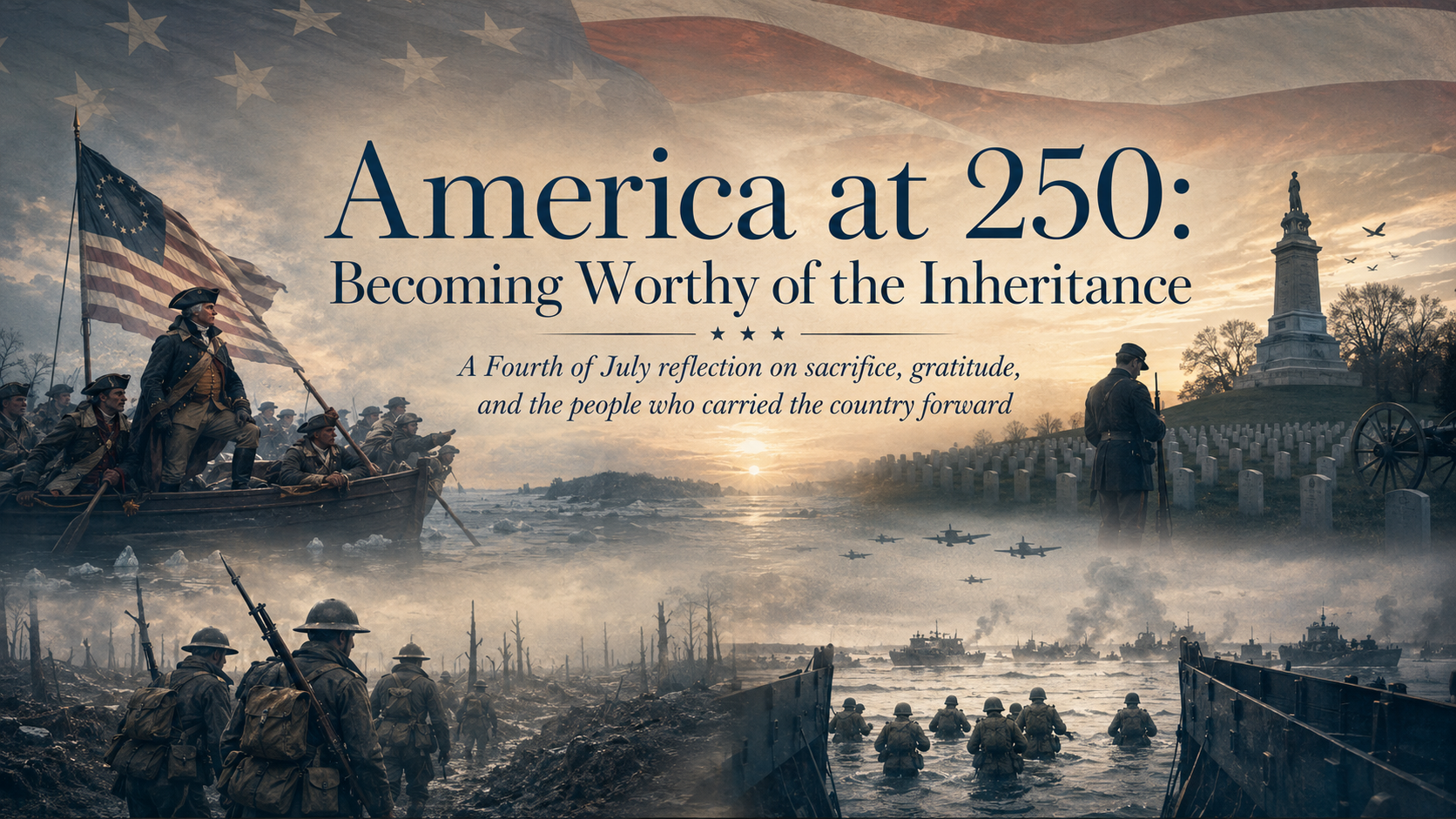
As the United States marks 250 years, I find myself feeling both grateful and small—grateful for what we inherited, and small in the presence of those who sacrificed to preserve it.
The deeper I have gone into American history, the more I have come to appreciate not only what we inherited, but the suffering, courage, and sacrifice that made the inheritance possible. Across 250 years, America has been carried forward by people who endured hardship, answered duty, sacrificed comfort, and fought for liberties they themselves might never fully enjoy.
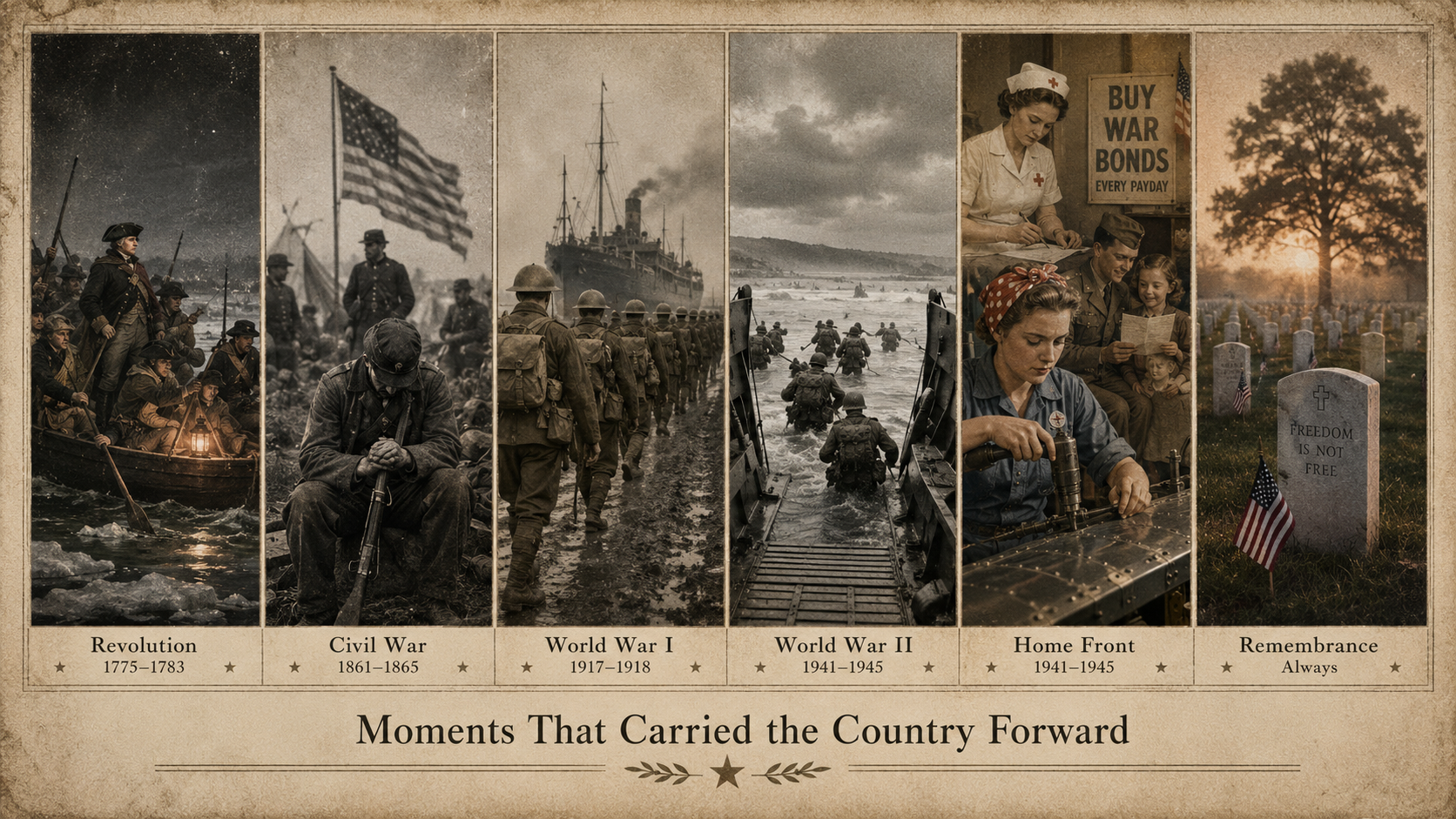
This archival-style montage is a reminder that our inheritance was not handed down casually. It was earned, defended, corrected, and passed forward by generations who bore far more than we are ever asked to bear.
A good friend once told me that if you were born in the United States, you had already won the lottery. I did not fully appreciate that when I was younger. I think I understand it better now.
The lottery was not a guarantee of ease, wealth, or fairness. America has not been equally available to everyone. For many Americans—Black Americans, Native Americans, immigrants, women, religious minorities, and others—the promise of this country was delayed, denied, or fiercely contested. But one of the remarkable facts of American history is that so many people who were excluded from the full blessings of this country still believed deeply enough in its possibilities to fight for a larger claim on its promise. They did not simply walk away from the American experiment. They worked, marched, suffered, voted, served, argued, sacrificed, and insisted that the country live closer to its own ideals.
That says something profound about America.
At 250 years, I think the fitting response is gratitude, honest gratitude, and a determination to become more worthy of the inheritance.
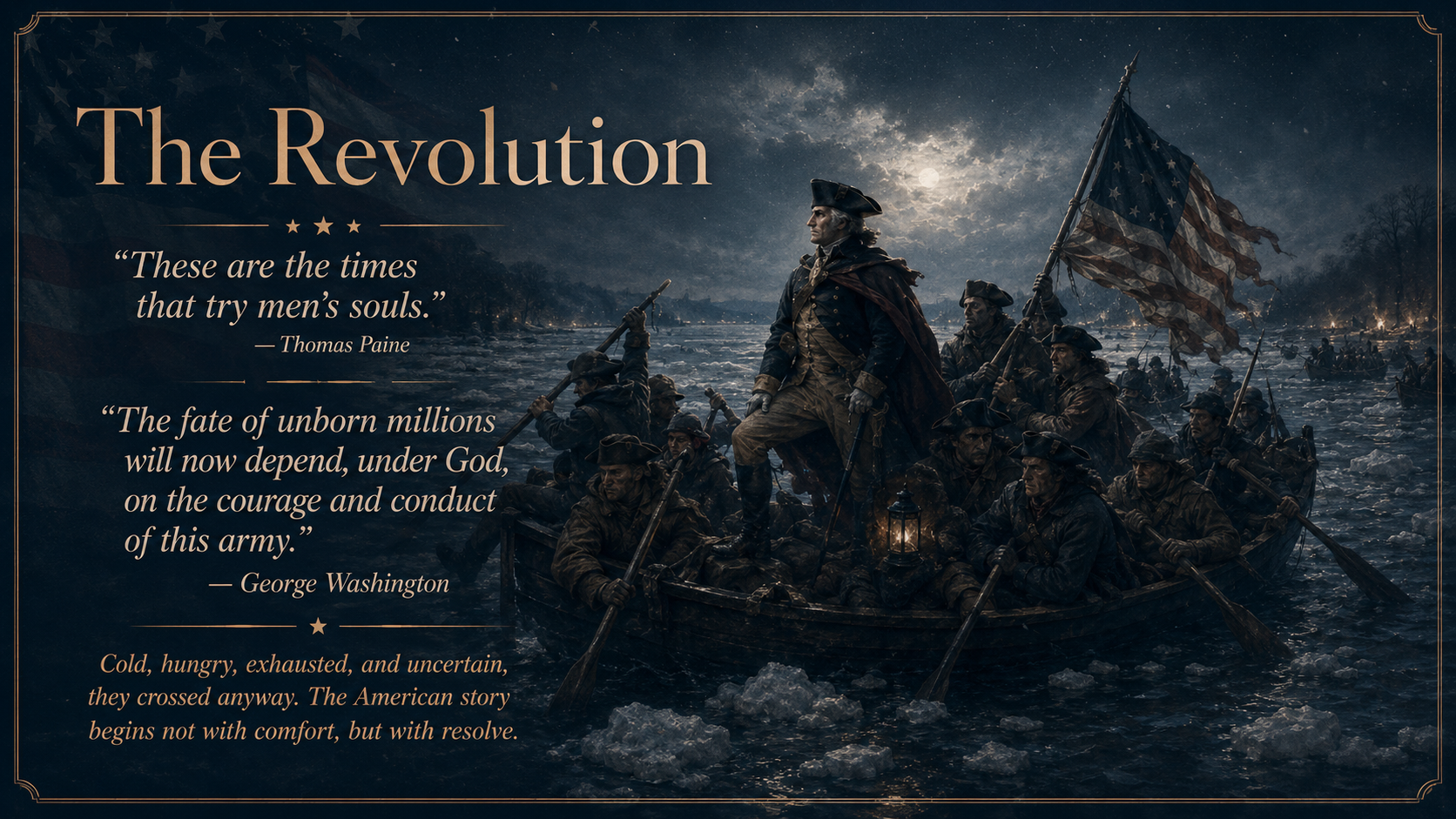
It is tempting to take the Revolution for granted because we know how the story ends. But in reality, nothing about American independence was inevitable. By late 1776, the American cause looked fragile, perhaps even doomed. Washington’s army had suffered repeated defeats. Morale was low. Supplies were short. Enlistments were expiring. Men were cold, hungry, exhausted, poorly clothed, and uncertain whether the cause they had joined would survive.
And yet they crossed the Delaware—not because victory was certain, but because the cause was too consequential to abandon.
That image still gives me goosebumps. Not because it is mythic, but because it is so profoundly human. It captures America before it was secure: cold, hungry, exhausted, uncertain, and standing at the edge of failure. These were men with every reason to turn back, every reason to surrender to fatigue, fear, and doubt. And still, they crossed.
They crossed in the cold. They crossed in danger. They crossed with no guarantee that history would remember them kindly—or remember them at all. What they carried across that river was not confidence. It was resolve. It was duty. It was the fragile hope that liberty was worth the suffering required to preserve it.
America began at the edge of failure, carried forward by men who chose resolve over despair. We owe them more than admiration from a distance. We owe them more than ceremonies and words. We owe them lives lived with gratitude, seriousness, and a determination not to squander their suffering or their hope. Above all, we owe them the effort to become worthy of what they carried across that river.
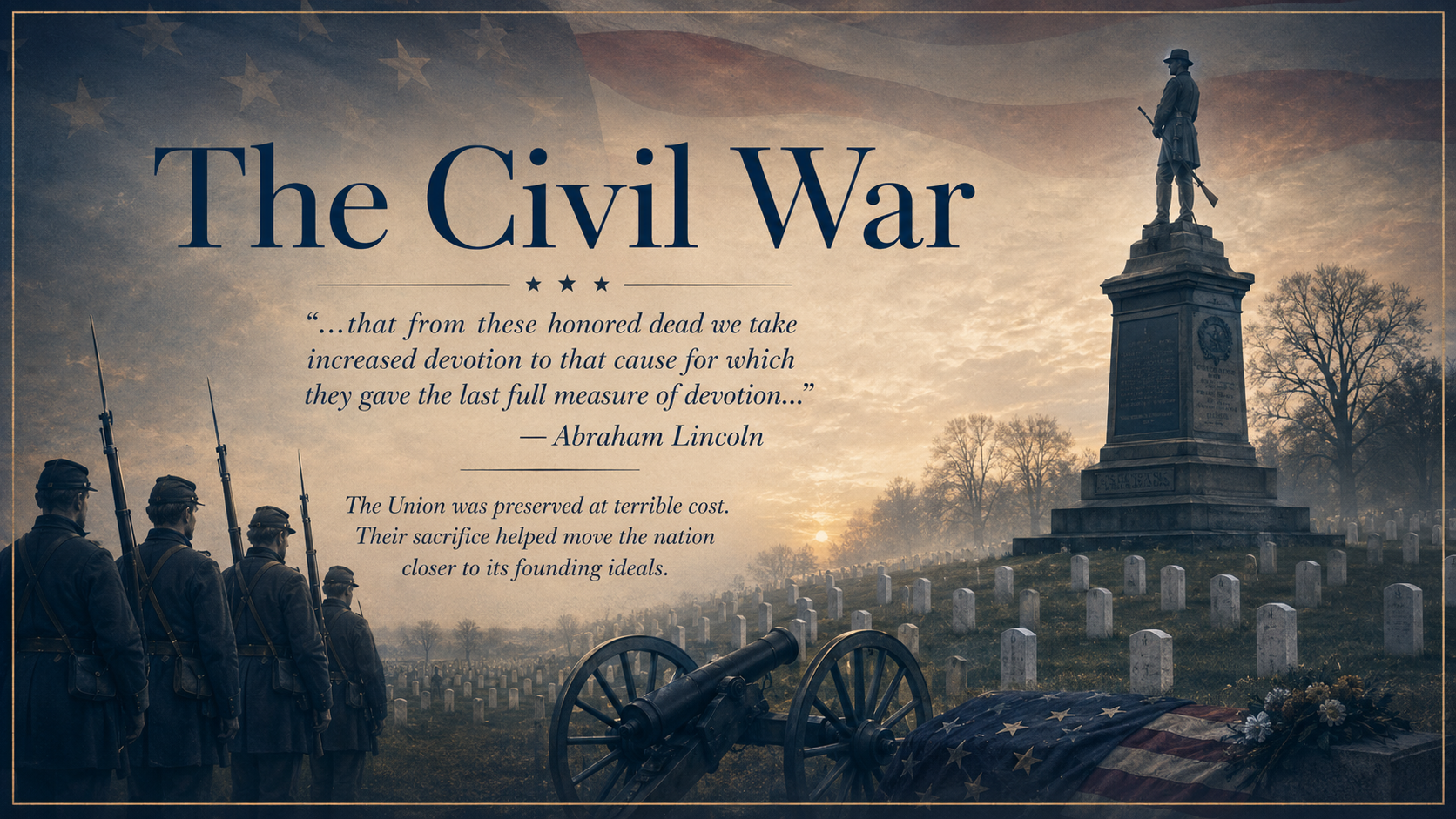
The nation nearly tore itself apart over slavery, union, citizenship, and the meaning of liberty itself. The country was forced to confront the terrible contradiction between its founding ideals and its lived reality.
And yet the Union endured.
It endured because men gave what Lincoln called “the last full measure of devotion.” It endured because sacrifice, suffering, and moral reckoning moved the country—slowly, painfully—closer to the principles it had declared at the beginning.
The Civil War demands a more serious patriotism—one honest enough to face the nation’s failures and grateful enough to honor those who paid the price to preserve its promise. By the time it ended, hundreds of thousands of Americans were dead, families were shattered, and fields across the country had become places of mourning. The Union survived, but it survived through sacrifice almost beyond comprehension. Once again, remembrance is not enough. We are asked to become worthy of what they gave.
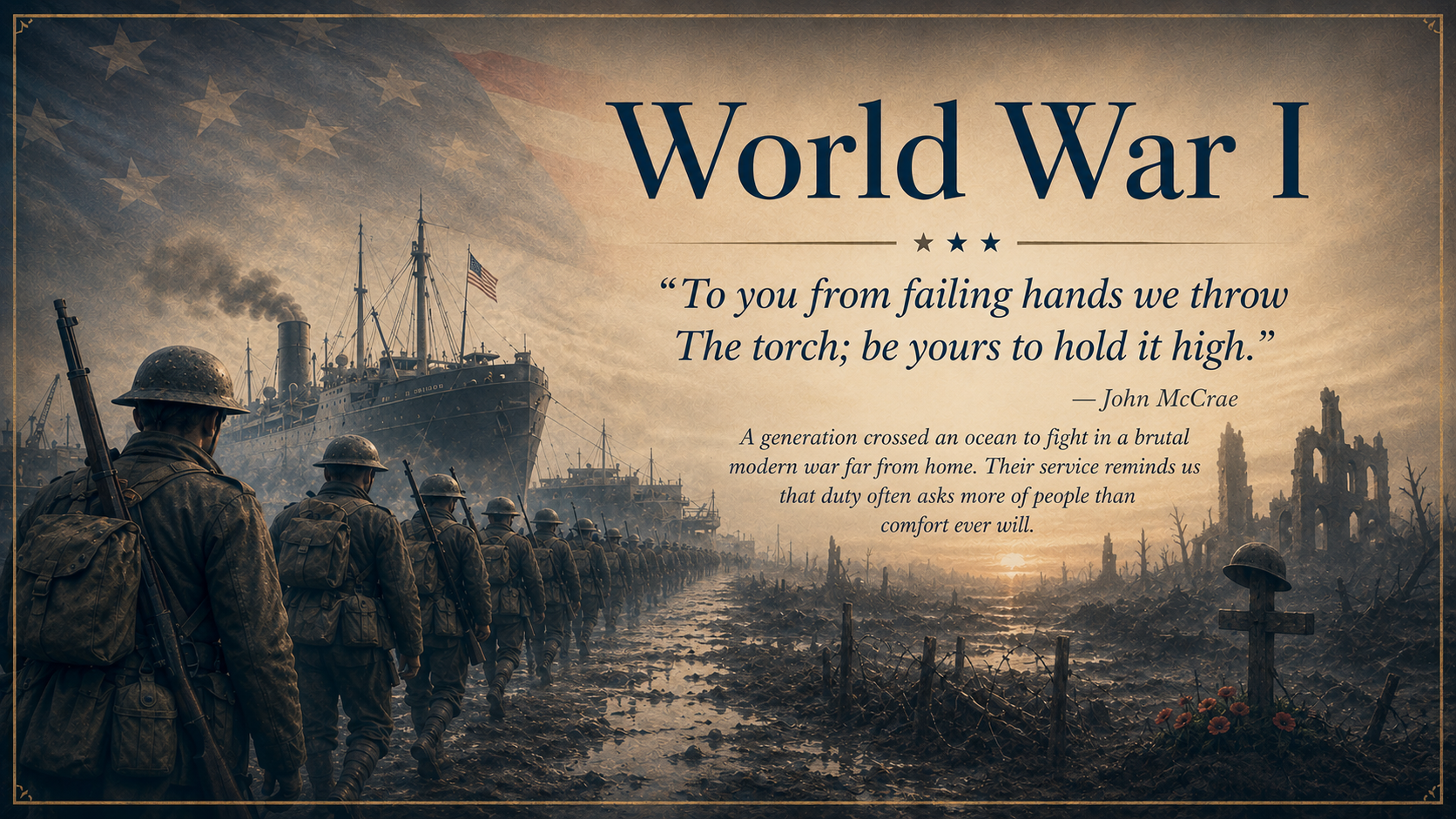
World War I can feel distant now, almost buried beneath the larger shadow of World War II. But for the young Americans who went, it was not distant at all. It was mud, wire, gas, artillery, disease, fear, and industrial killing on a scale previous generations could hardly have imagined.
This was not, at first, America’s war. It was Europe’s. But when the nation entered it, young Americans were called from farms, towns, cities, classrooms, jobs, sweethearts, families, and the ordinary pleasures of life. Some volunteered; many were drafted. Together, they crossed the Atlantic into a war already soaked in grief.
Many were young enough that, in another life, they might simply have been beginning careers, learning trades, courting sweethearts, playing ball, or starting families. Instead, they stepped into trenches and shellfire, into mud and sickness, into a world that demanded more courage and endurance than most of us can honestly imagine.
Their service reminds us that duty often asks ordinary people to bear extraordinary burdens. And once again, remembrance is not enough. We are asked to become worthy of what they carried forward.
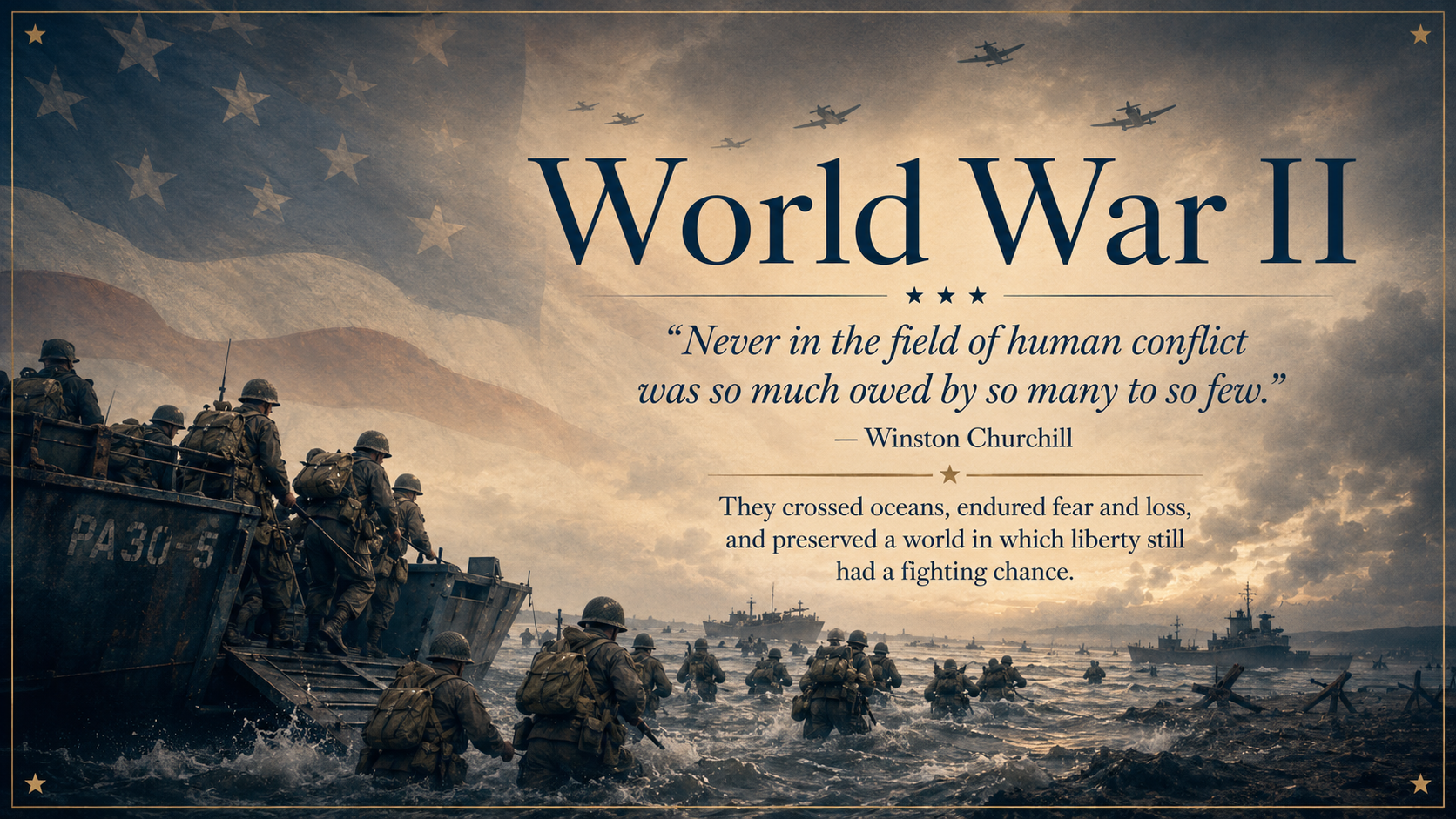
World War II widened the scale of sacrifice.
Millions served in uniform. Millions more served at home—in factories, hospitals, farms, shipyards, offices, schools, and households held together by waiting, rationing, worry, prayer, and grief. Men and women crossed oceans and landed on beaches under fire. Sailors lived with the terror of open seas and hidden submarines. Airmen flew into skies where return was never certain. Nurses, medics, and servicewomen carried burdens that history has too often understated. Families received telegrams that divided life forever into before and after.
These were imperfect men and women, as we all are. But when history asked more of them, they rose to the occasion. For that moment, in that cause, they became something larger than themselves.
When I think about them, I feel humbled—and, at times, a little embarrassed by the smallness of many modern complaints. We live in a time when inconvenience is often mistaken for hardship. The Wi-Fi goes out. Gas prices rise. A flight is delayed. The weather is too hot. The line is too long. The day does not bend quickly enough to our preferences.
Of course, modern problems are real. Every generation has its own burdens, fears, and uncertainties. But history restores proportion and humility. It reminds us that not every hardship is suffering, not every frustration is oppression, and not every complaint rises to the level of sacrifice. We live in the shelter of what others endured.
And once again, remembrance is not enough. We are asked to become worthy of what they preserved.
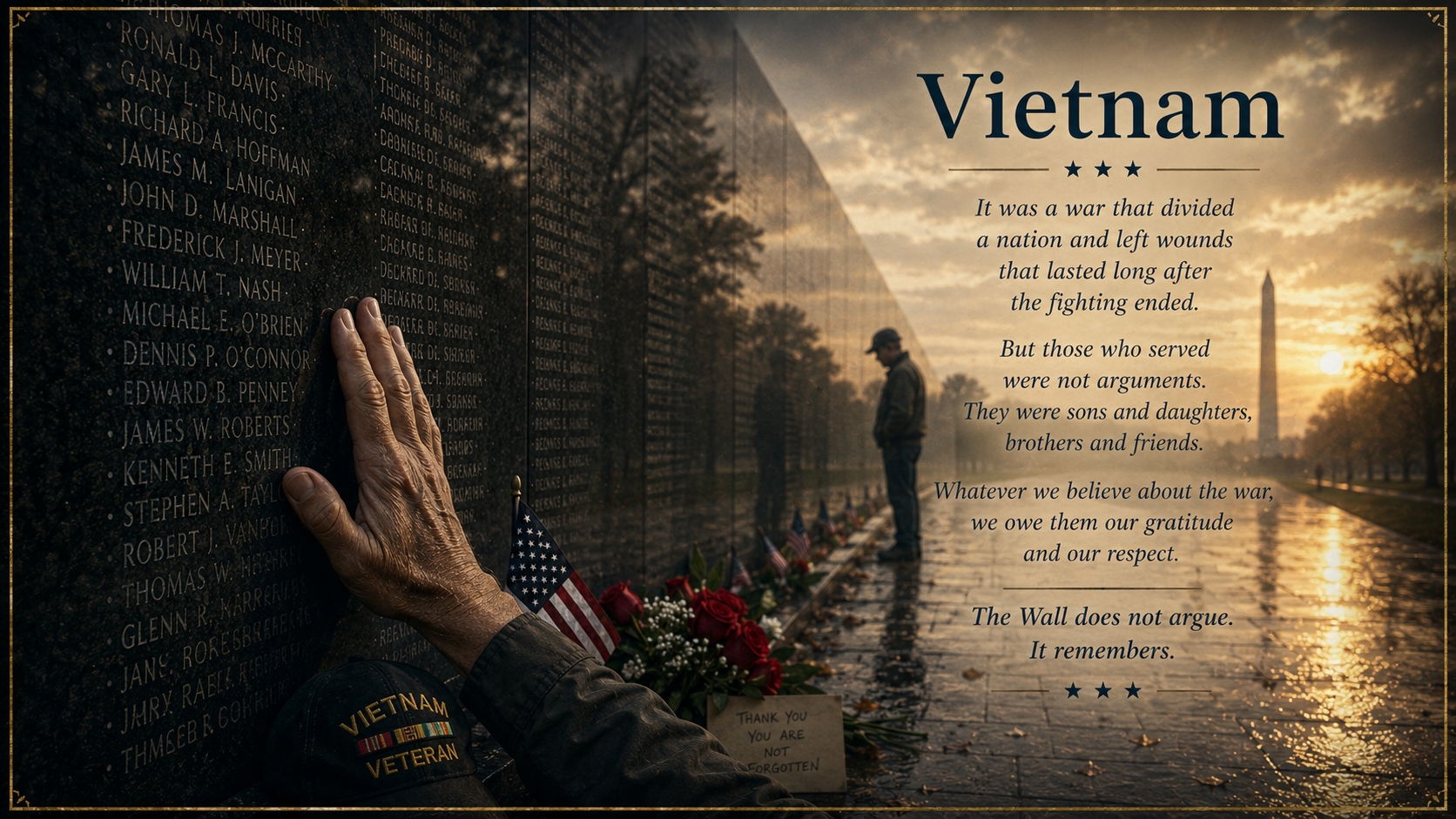
Vietnam asks something different of us.
It was not World War II. It did not carry the same national unity, clarity, or moral certainty. It divided the country, strained trust in government, and left wounds that lasted long after the fighting ended.
But those who served were not abstractions in a national argument. They were sons and daughters, brothers and friends, classmates and neighbors. Some volunteered. Many were drafted. Many were young enough to have been thinking about college, work, marriage, children, or simply the ordinary next steps of life. Instead, they were sent into heat, jungle, fear, confusion, loss, and a war whose meaning the country itself struggled to explain.
Whatever one believes about the war, the men and women who served deserve honor and gratitude. Too many came home to silence, suspicion, or contempt when what they had earned was our thanks, compassion, and respect.
The Vietnam Veterans Memorial is powerful because it does not argue. It remembers. Name after name, life after life, it strips away politics and leaves us with the human cost.
Vietnam reminds us that patriotism must be large enough to honor service even when history remains complicated. It asks us to separate the judgment of war from the dignity of those who bore it.
The Obligation of Inheritance
Most human beings across history did not inherit what we have inherited: constitutional protections, freedom of speech, religious liberty, economic opportunity, relative security, peaceful civic life, and the right to criticize government openly without fear. Most did not inherit a nation capable of welcoming millions of newcomers, confronting grave injustices, generating extraordinary prosperity, and preserving a framework for ordered liberty across centuries.
We did not build all of this. We inherited it.
We inherited it from founders who risked everything on an uncertain cause. We inherited it from soldiers who froze, marched, bled, crossed rivers, crossed oceans, and did not come home. We inherited it from families who waited, worked, buried, prayed, and rebuilt. We inherited it from reformers who forced the country to confront its contradictions. We inherited it from ordinary citizens who kept faith with the belief that America could become better without ceasing to be America.
That inheritance should leave us grateful. It should also leave us humbled.
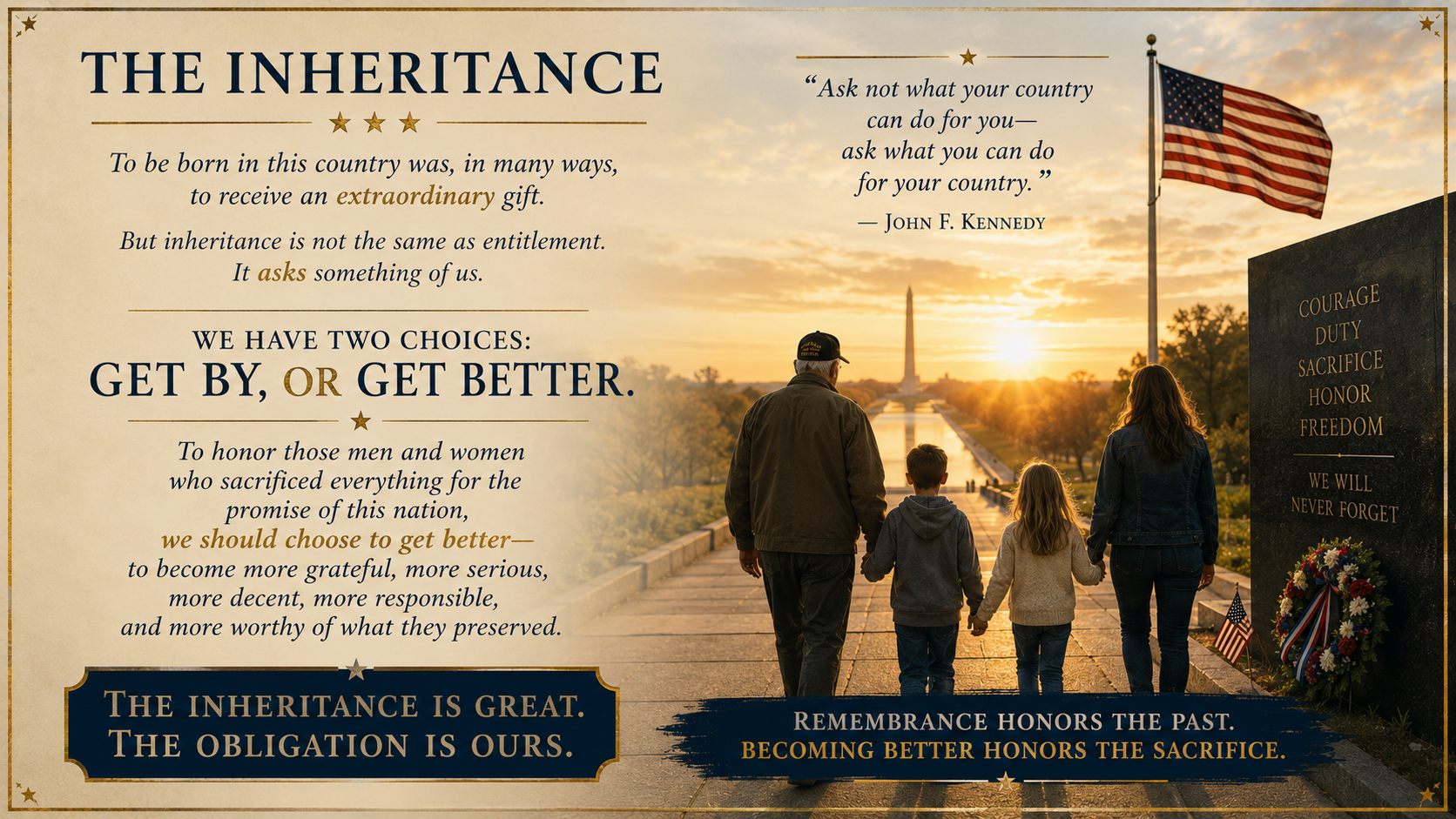
If we truly love this country, remembrance is not enough. Celebration is not enough. Complaint is not enough. The task before us is to live with enough gratitude, seriousness, courage, and decency to become more worthy of what was given to us.
At 250 years, that may be the most patriotic thing we can do.