
Essays Without the Noise
These essays are written with one goal in mind: more signal, less noise. Here you will find historical perspective, medical and policy analysis, and measured commentary on the presidency, healthcare, medicine, and public life—written to illuminate rather than inflame.

Iran and the Possibility of a Cold Peace
Iran and the United States have spent nearly half a century locked in distrust, retaliation, sanctions, and war. Yet Iran’s history, the nuclear threat, the Strait of Hormuz, and the poor record of imposed regime change all point toward a more realistic endgame: not friendship, but a verifiable cold peace in which sovereignty is respected, dangerous behavior has consequences, and compliance earns a path back to normal relations.
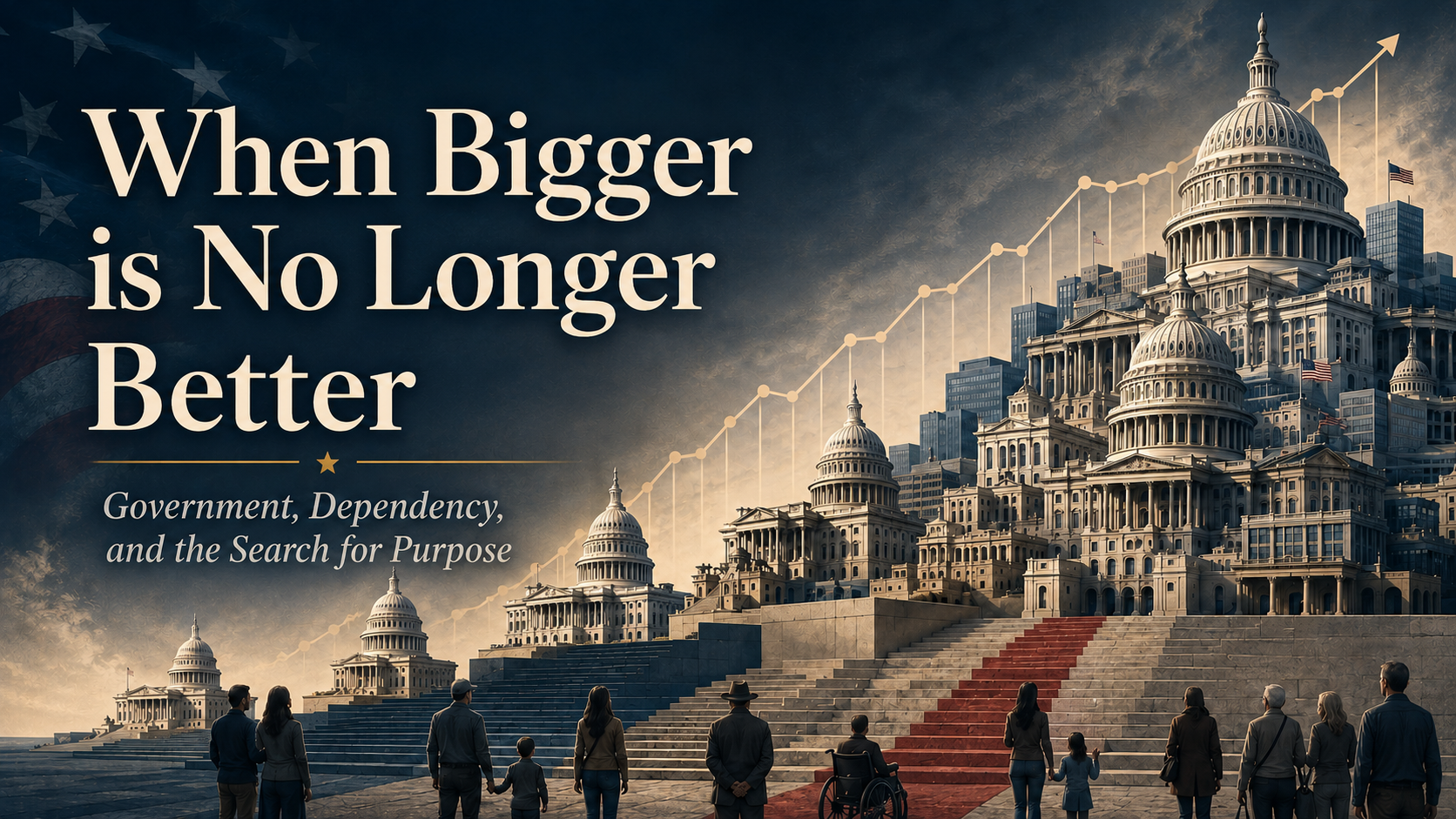
When Bigger Is No Longer the Answer
Government intervention helped rescue Americans during the Great Depression and later expanded healthcare, education, civil rights, and opportunity. But after nearly a century of growth, the harder question is whether more government can solve what an already enormous system has failed to fix—and where purpose must come from instead.
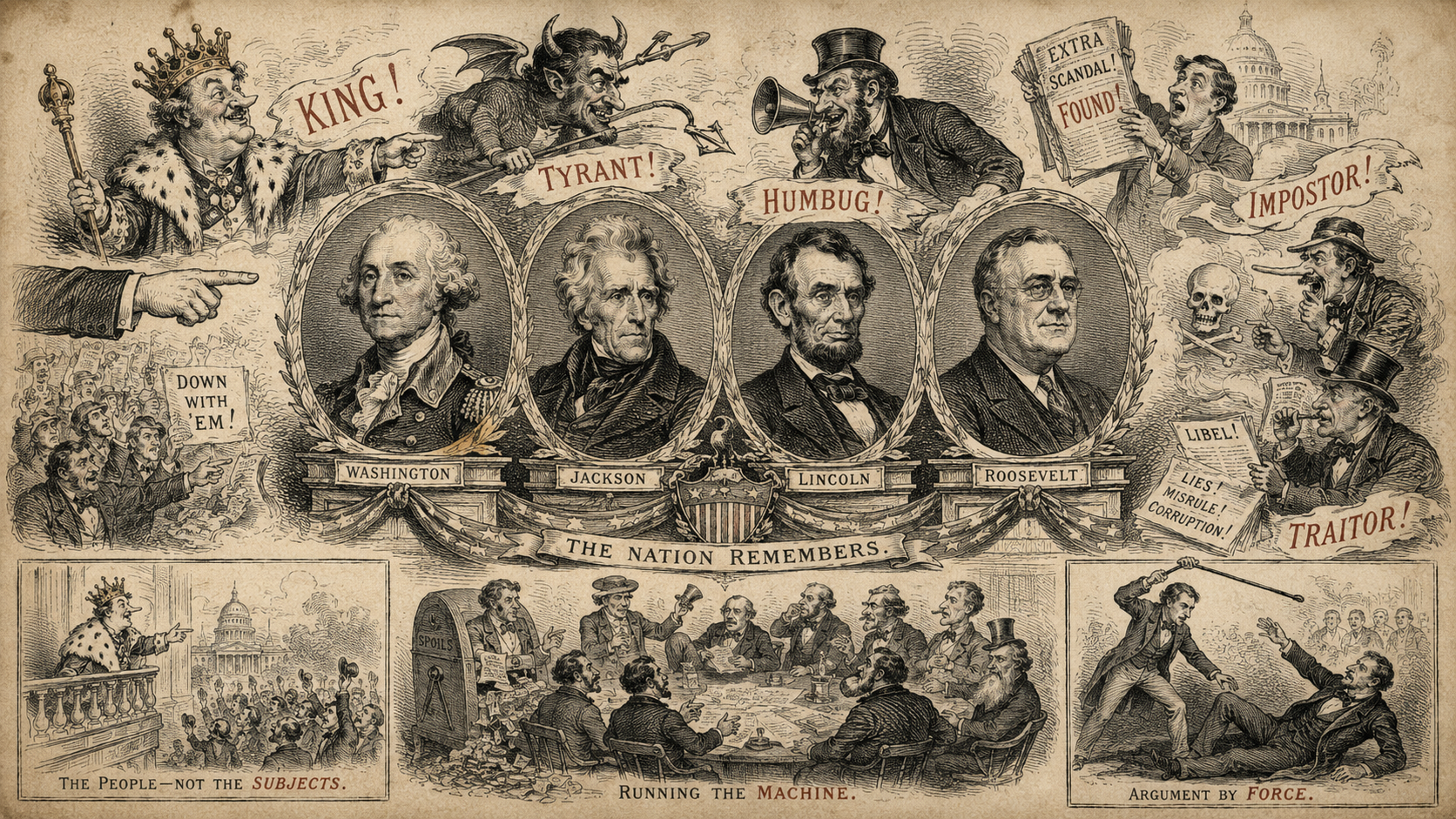
If You Think It’s Bad Now…
Political cruelty did not begin in 2016. George Washington was called an impostor, Andrew Jackson was dressed as a king, Martin Van Buren was crowned by Beelzebub, and Franklin Roosevelt was portrayed as a would-be dictator. The past was not kinder—it was simply less connected. What changed is the amplifier.

America at 250: Becoming Worthy of the Inheritance
A Fourth of July reflection on sacrifice, gratitude, and the obligation to become worthy of America’s inheritance.
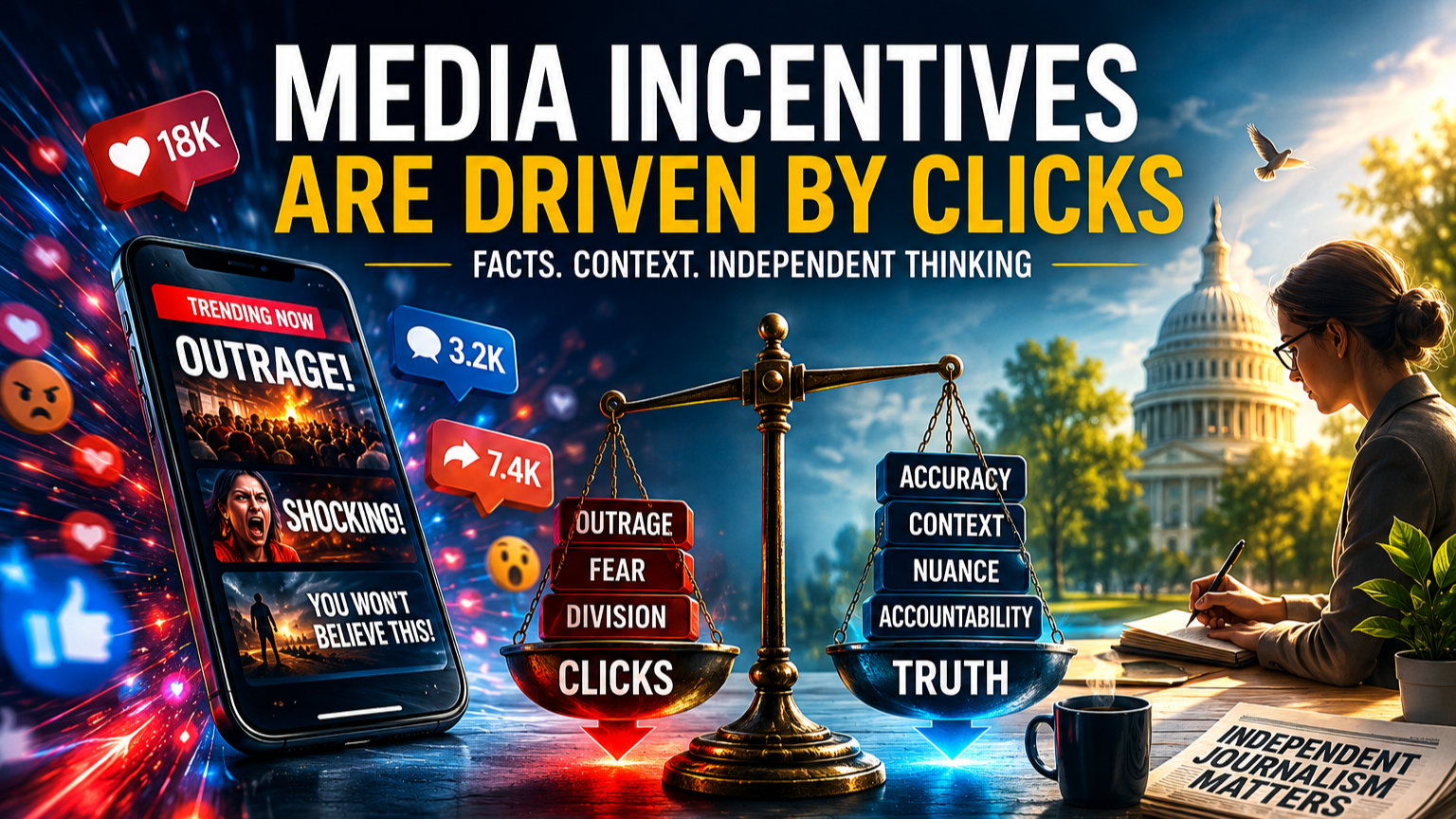
Credibility in an Age of Noise
Trust in the media has fallen while the volume of information has exploded. Yet the challenge facing citizens today is larger than deciding which news sources to trust. We now navigate an information ecosystem shaped by algorithms, artificial intelligence, audience incentives, commentary, and declining institutional credibility. This essay examines why evaluating news has become more difficult, what research tells us about modern media incentives, and how readers can develop a disciplined approach to separating reporting, opinion, and persuasion.
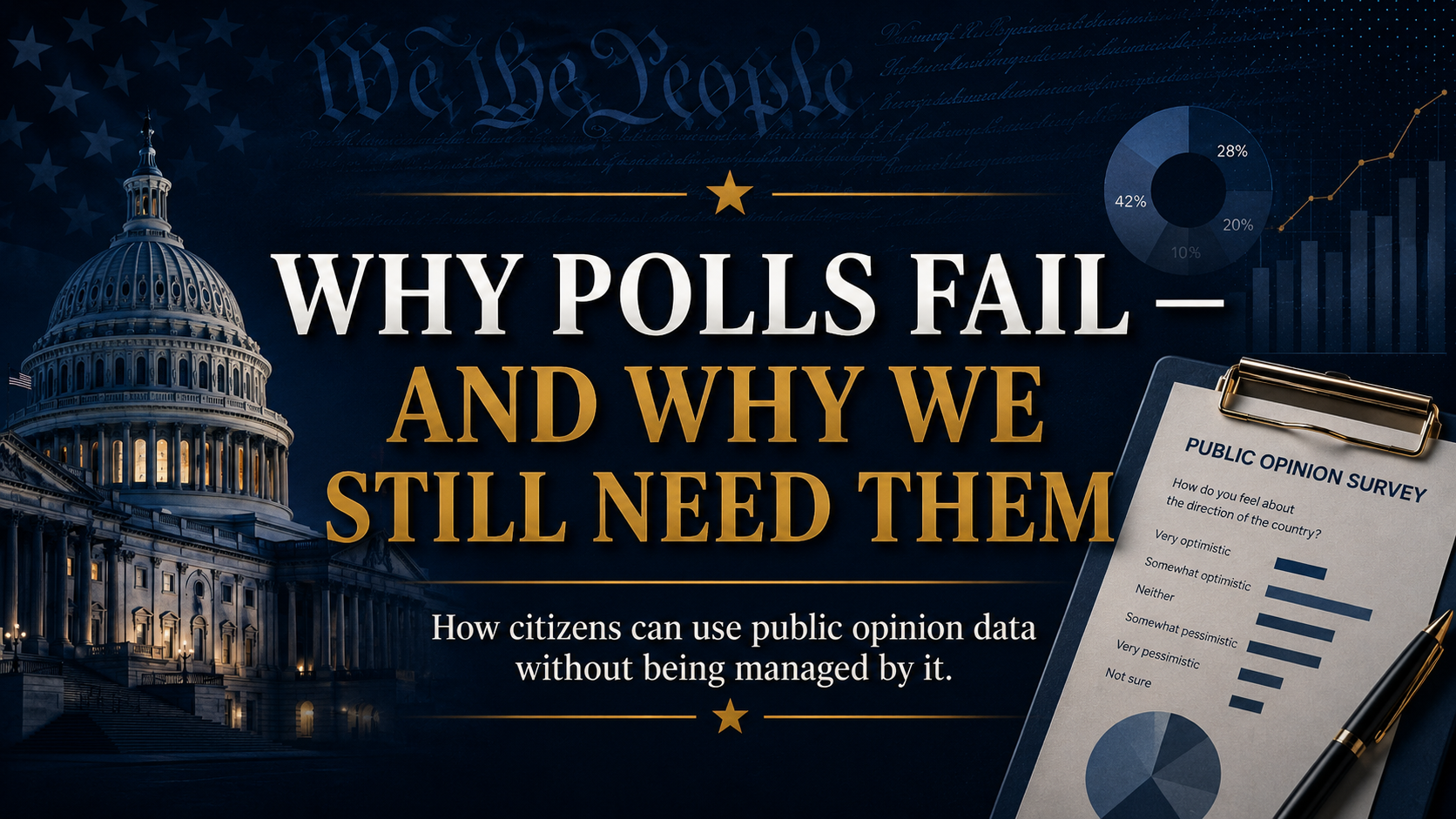
Why Polls Fail – and Why We Still Need Them
Polls can help us see beyond our own circle, but they can also mislead when treated as predictions or political weapons. This essay looks at why polls fail, why they still matter, and how citizens can use them without being managed by them.
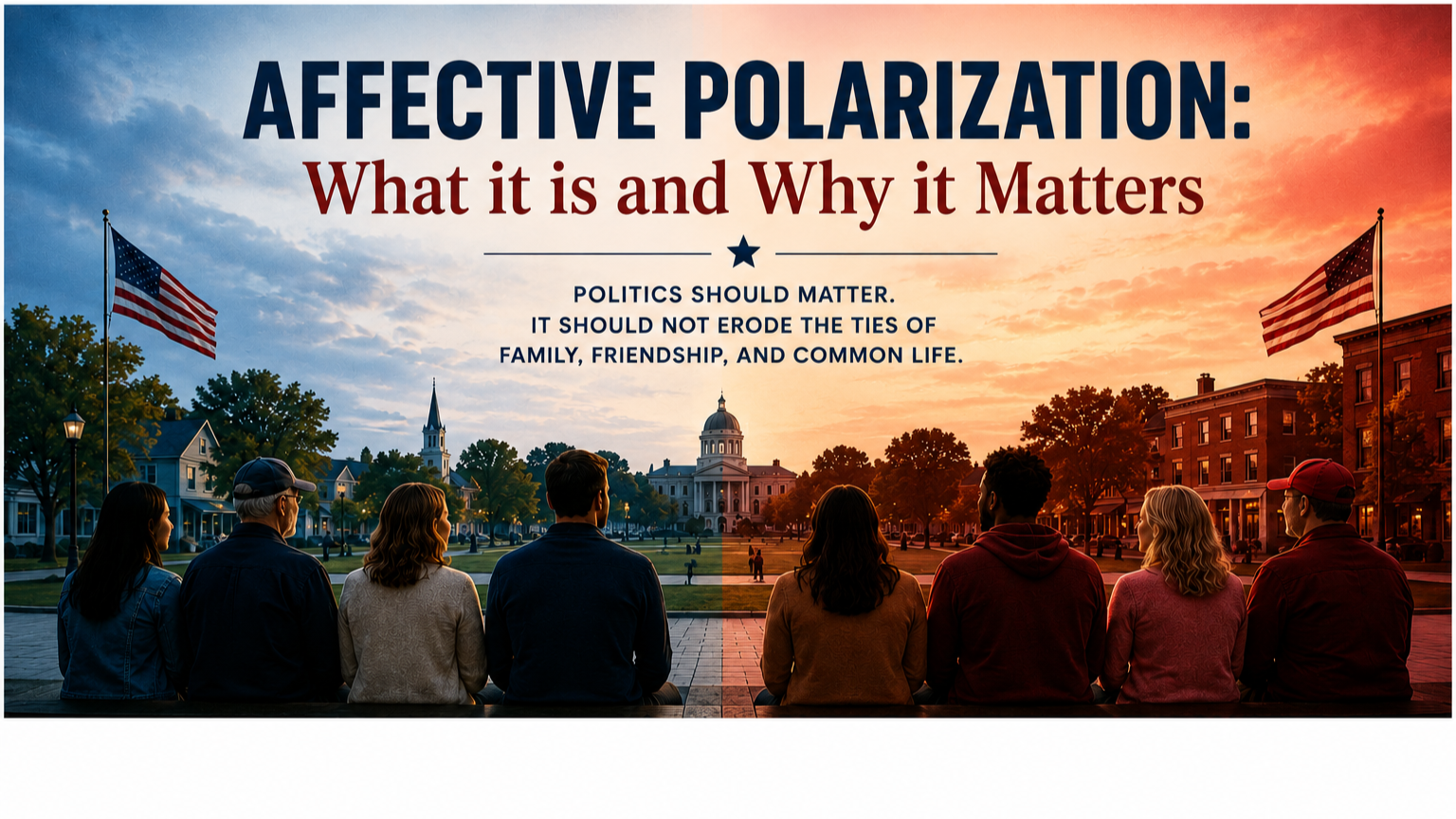
Affective Polarization: What it is and Why it Matters
Politics is not just dividing Americans by policy. It is teaching us to see one another through the lens of caricature, suspicion, and moral contempt. This essay looks at affective polarization, the role of media and digital life in inflaming it, and why recovering proportion, common decency, and shared everyday bonds may matter more than ever.