
Essays Without the Noise
These essays are written with one goal in mind: more signal, less noise. Here you will find historical perspective, medical and policy analysis, and measured commentary on the presidency, healthcare, medicine, and public life—written to illuminate rather than inflame.
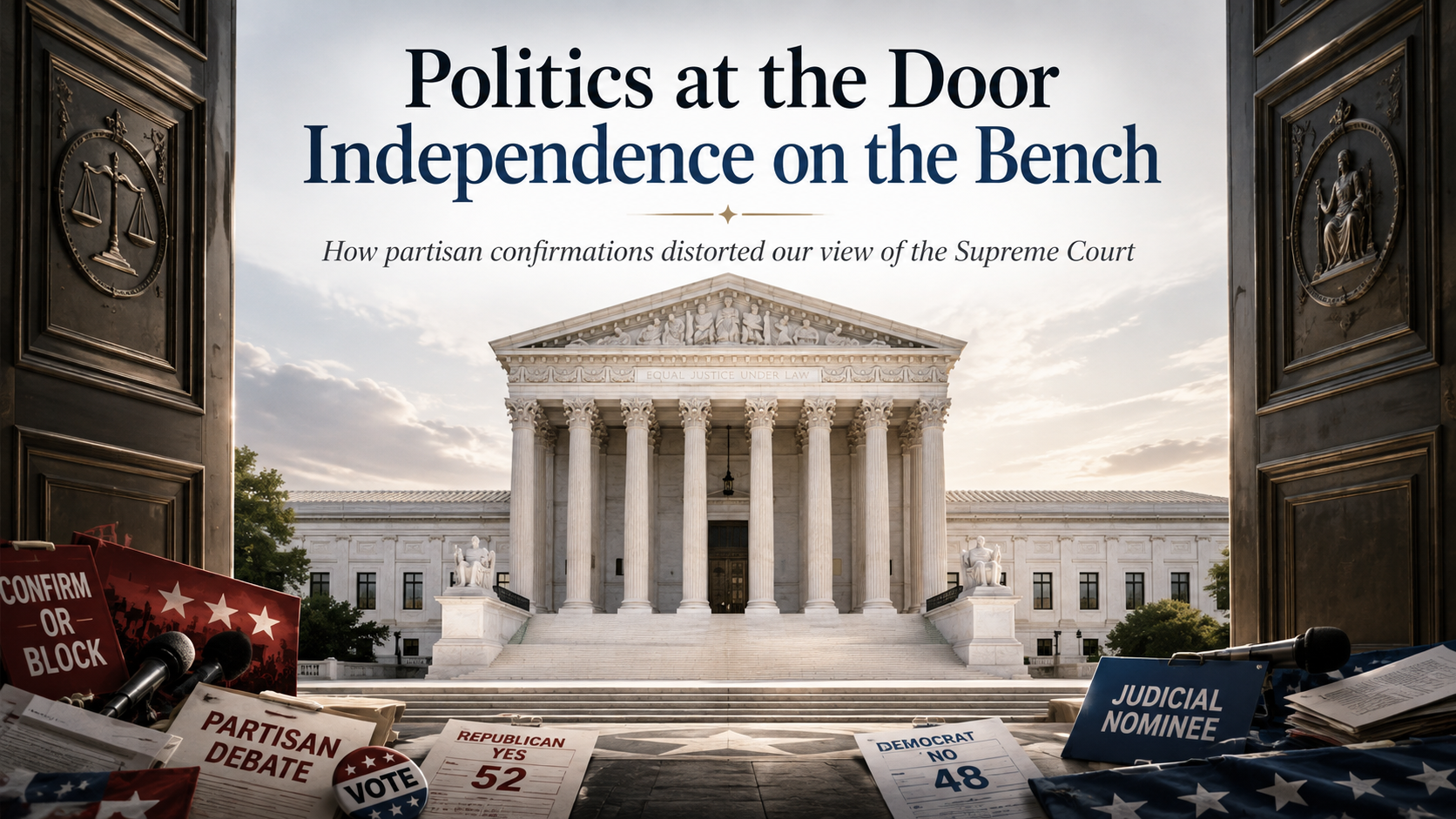
Politics at the Door, Independence on the Bench
The Supreme Court is widely viewed as a political institution—but the evidence is more complicated. A look at judicial independence, lifetime tenure, increasingly partisan confirmations, and recent Court decisions suggests that we may have politicized the process of choosing justices more than the justices themselves.
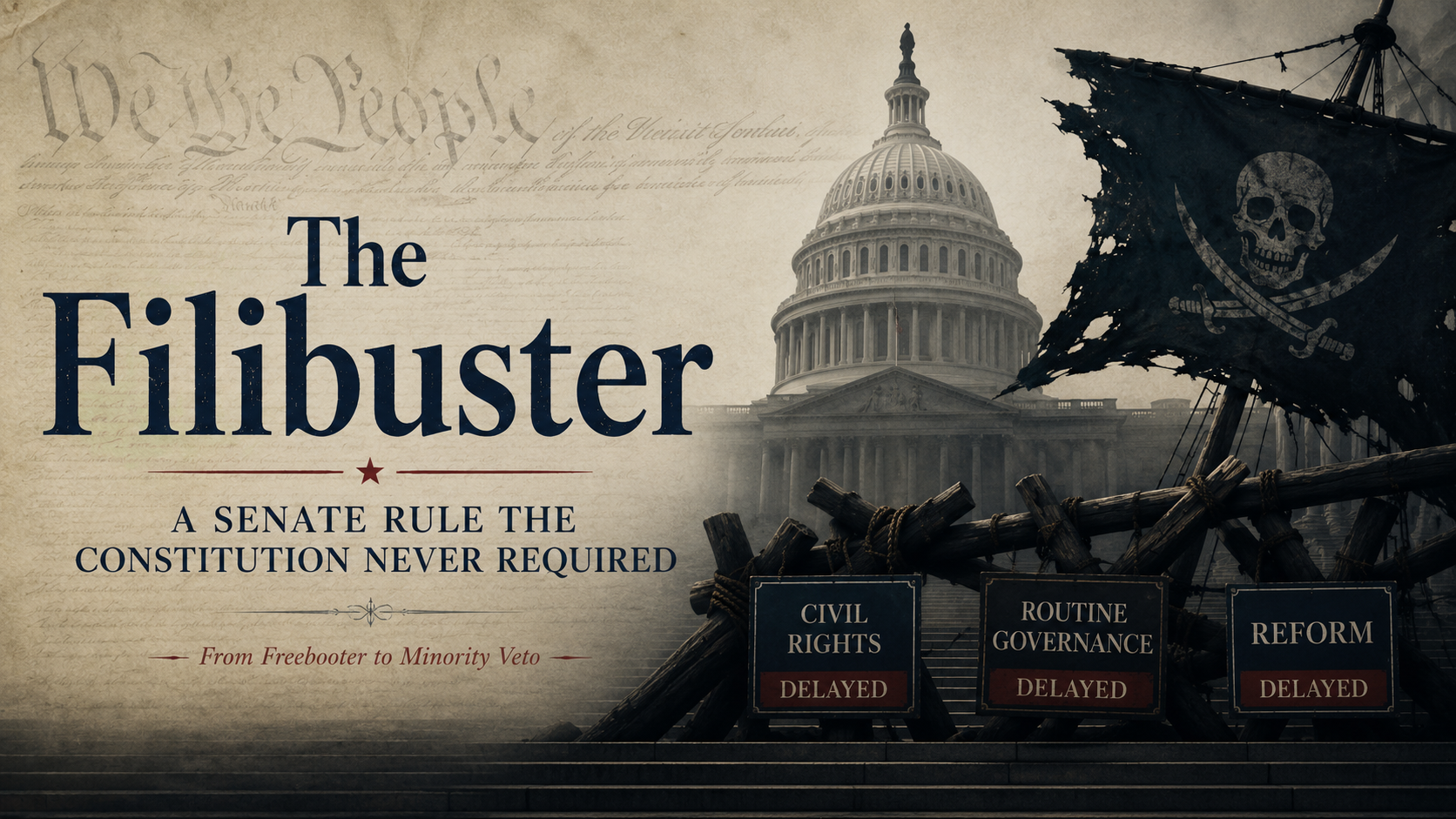
The Filibuster: From Freebooter to Minority Veto
The filibuster was not created by the Constitution, and the Founders never required 60 votes for ordinary legislation. What began as a procedural accident evolved into a powerful minority veto—one that delayed civil-rights legislation, complicates routine governing, and can make it harder to fund existing government than to confirm a lifetime federal judge. After looking more closely at its history and consequences, the case for keeping the modern filibuster becomes increasingly difficult to defend.
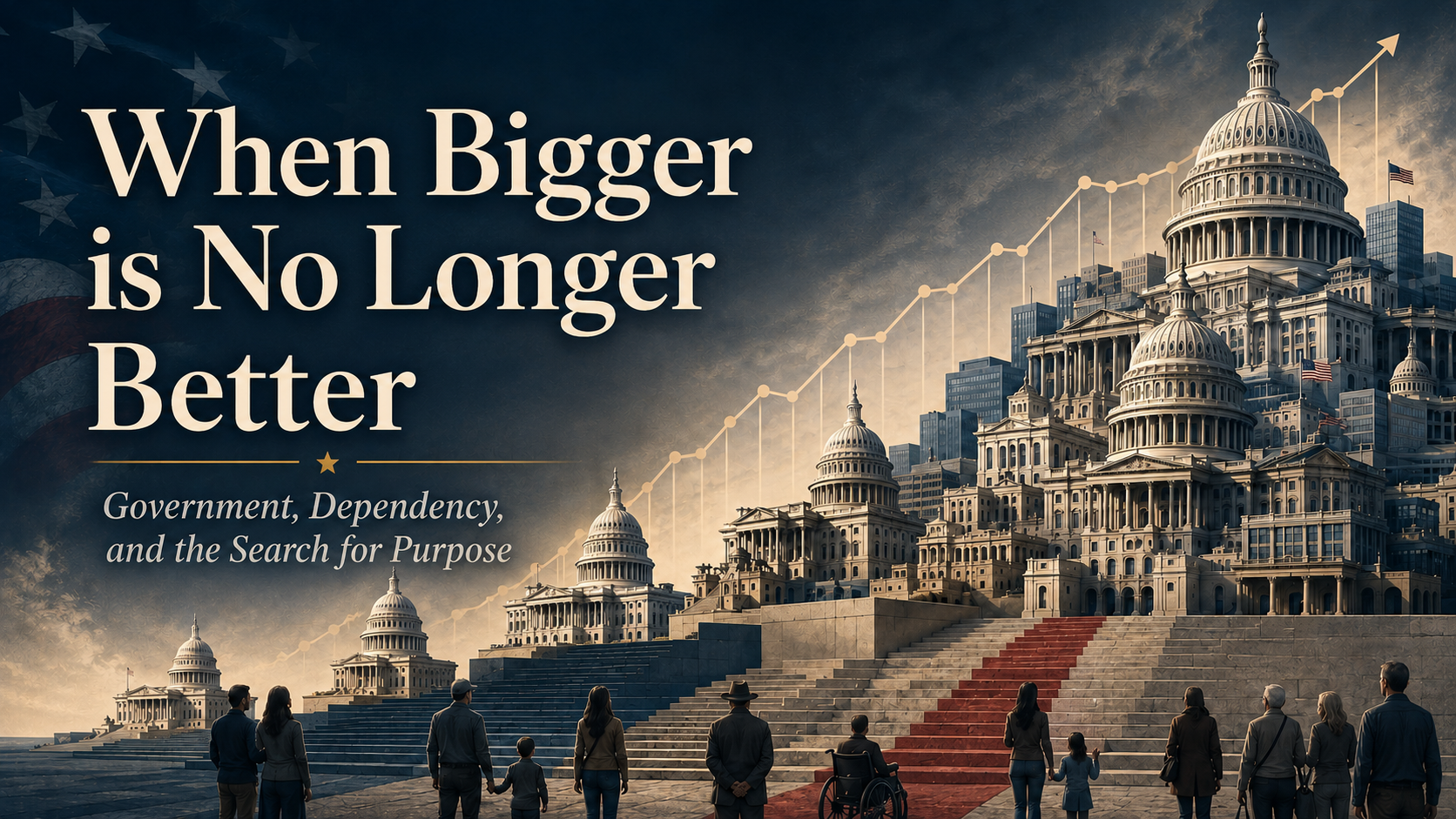
When Bigger Is No Longer the Answer
Government intervention helped rescue Americans during the Great Depression and later expanded healthcare, education, civil rights, and opportunity. But after nearly a century of growth, the harder question is whether more government can solve what an already enormous system has failed to fix—and where purpose must come from instead.
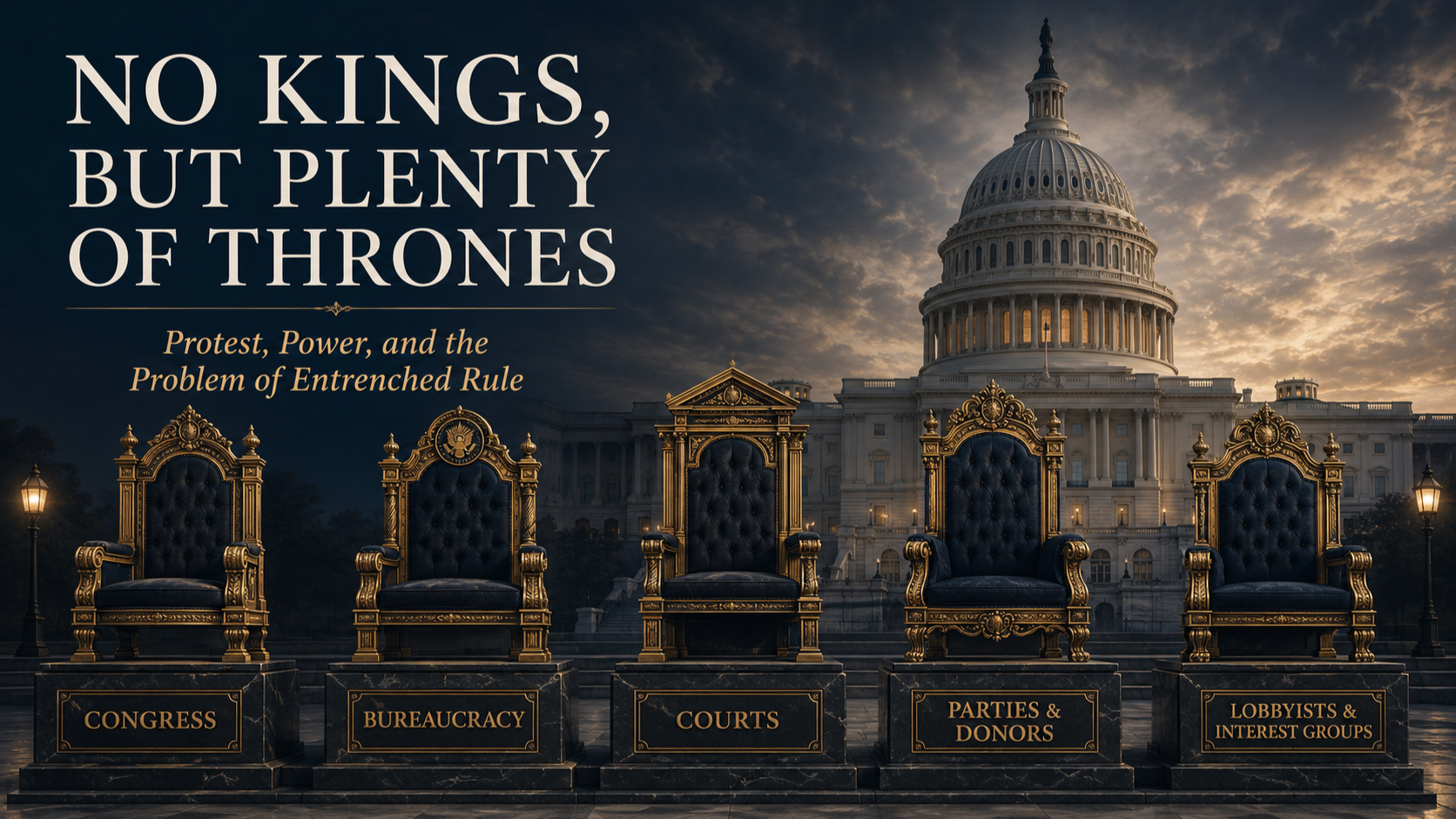
No Kings, But Plenty Of Thrones: Protest, Power, And The Problem Of Entrenched Rule
Americans have always protested presidents. But the deeper question is whether protest clarifies where power actually sits. The United States has no king, yet power can still become entrenched through career politicians, safe seats, party machinery, courts, agencies, donors, and bureaucracies that outlast elections.
“No Kings” is a powerful slogan. But if we take it seriously, the question should not be limited to the presidency. A republic can reject monarchy and still build thrones.
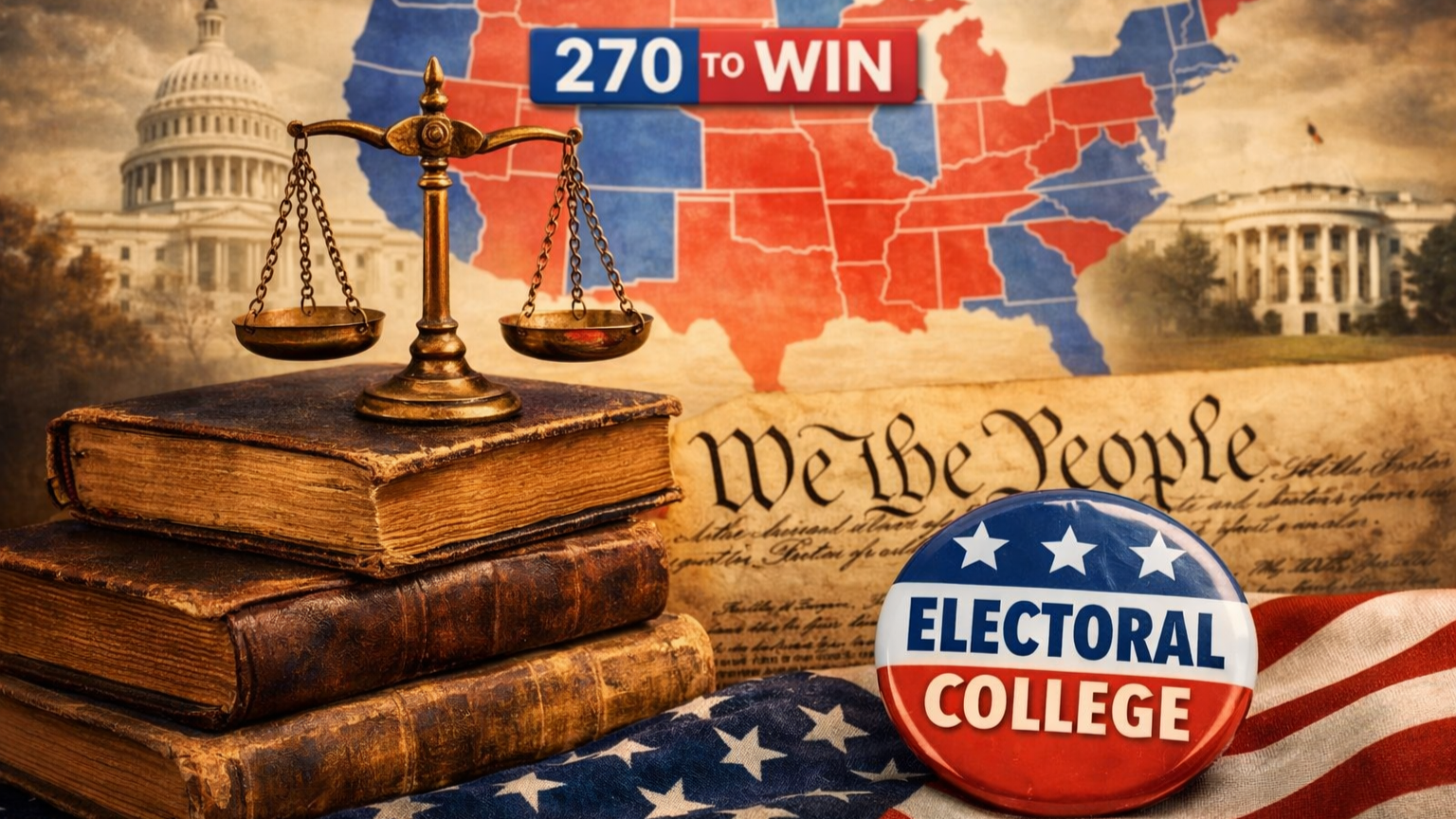
The Electoral College and the Federal Bargain
The Electoral College remains one of the most debated features of the American constitutional system because it sits at the intersection of democracy, federalism, and history. Created as part of the founding compromise between national popular rule and state-based political power, it was designed to preserve a meaningful role for the states—especially smaller states—in choosing the president. That same logic helps explain both its strengths and its frustrations today.
The Resilience of American Democracy
For nearly 250 years, American democracy has been tested by conflict, crisis, distrust, and overheated political rhetoric. Yet the republic has endured in large part because its governing structure is unusually layered: divided among branches, dispersed across 50 constitutional states, and sustained by courts, elections, civic institutions, and public argument.
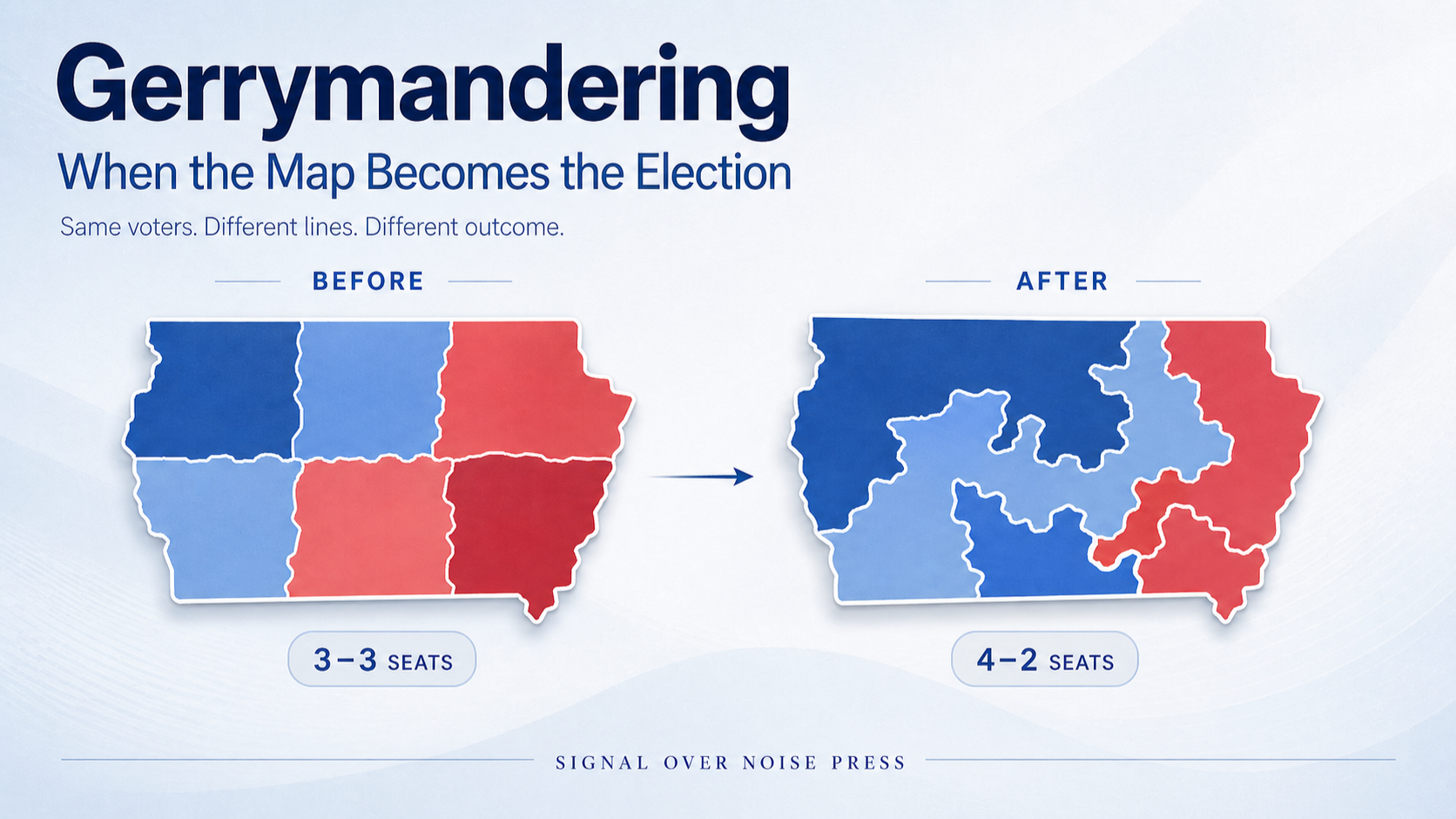
Briefs: Gerrymandering – When the Map Becomes the Election
Gerrymandering is not just a technical fight over district lines. It is a fight over whether voters choose their representatives — or representatives choose their voters.
Briefs: When Impeachment Becomes Routine
Impeachment was designed as one of the Constitution’s gravest remedies, not as a routine instrument of political opposition. This essay looks at the historical record, the recent flurry of impeachment filings, and the danger of turning an extraordinary safeguard into ordinary partisan warfare.